

Zombie Tsunami
Mobigame SAS
Zombie Tsunami is the kind of arcade game I can open for a quick distraction and still find myself playing several runs later. Instead of controlling a single hero, I guide a growing crowd of zombies through a constantly moving side-scrolling course. The basic idea is simple: keep the group alive, collect people, avoid hazards, and use temporary powers at the right moment. That combination makes it immediately approachable, but the crowd itself creates enough pressure to stop each run from feeling completely automatic.
I tested it as a casual mobile game rather than as a long-form adventure, and that is where it makes the strongest impression. It does not ask me to learn a complicated control scheme before I can enjoy it. At the same time, surviving well requires more than tapping without thinking. The size of the zombie group changes how I approach obstacles, and a mistake can turn a confident run into a scramble very quickly. Its real appeal is the way a one-touch arcade format becomes a game about managing momentum, risk, and crowd size.
How the run-and-collect formula works
The controls are deliberately light. My attention stays on the path ahead while I make the character jump over gaps, vehicles, barriers, and other dangers. The zombies follow as a group, so the challenge is not only whether the front character lands safely. I also need to think about whether the whole crowd can make it through the next section. That gives each jump a little more weight than it would have in a standard endless runner with one character.
Collecting pedestrians is the main way a small group becomes a larger one. This creates an enjoyable tension: a bigger crowd is more forgiving when individual zombies are lost, but it can also make me less careful because the run feels secure. I learned to treat every new recruit as useful rather than invincible. A risky jump may be worthwhile when the group is tiny, while the same move can be unnecessary when I already have enough bodies to absorb a mistake.
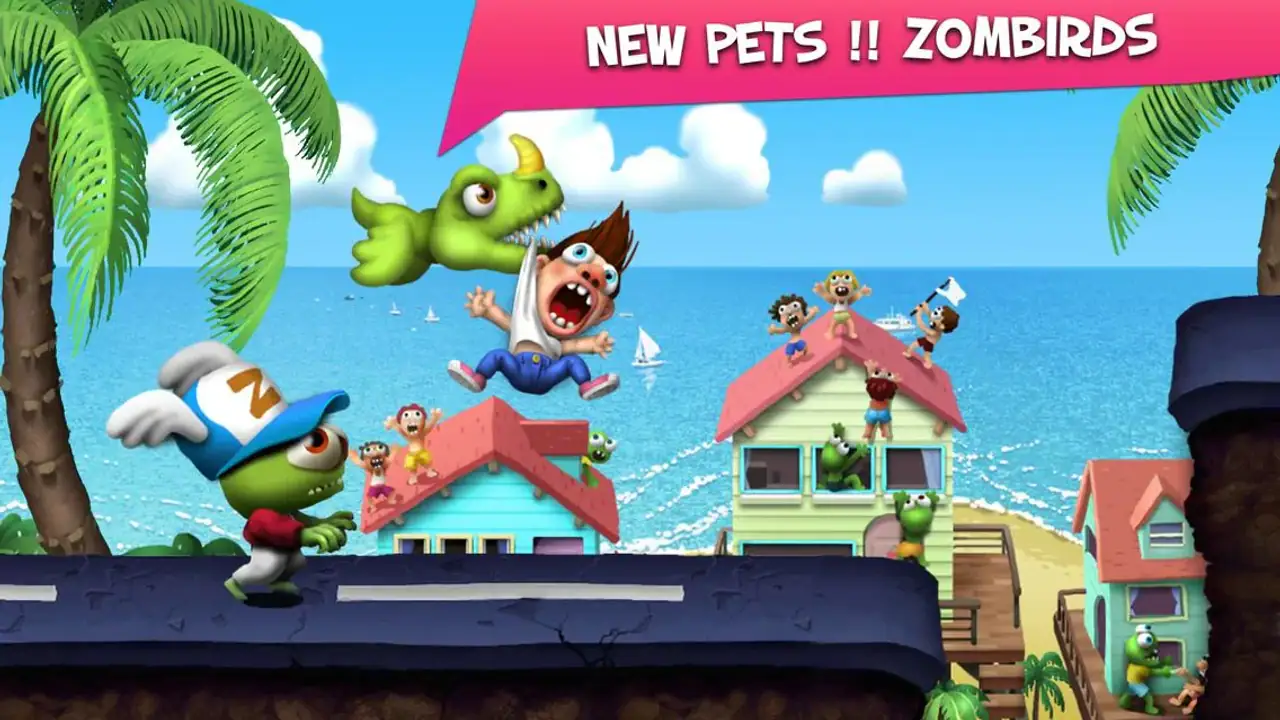
The visual style supports the playful tone. The undead theme is presented with exaggerated cartoon energy rather than a serious horror atmosphere, which makes the game easier to recommend for short family-friendly gaming sessions. The content rating is Everyone 10+, so I would still consider the age guidance before handing it to a younger child, but this is not a grim survival game. Its humor and bright presentation are central to why the repeated runs remain easy to return to.
Related News

Why WhatsApp Messenger Still Makes Everyday Communication Feel Easy

Jurassic World: The Game Is the Better Dino Tycoon for Strategic Players

Threads in Real Life: Who Should Join, Lurk, or Leave

How SHEIN Turned Shopping Into an Endless Content Feed

How to Make Fortnite Feel Smarter on Mobile

Should You Switch to Microsoft Outlook on Mobile?
Why the crowd changes the decisions
Many runners are built around protecting one character, so a failed jump usually means an immediate restart. Here, the crowd can function as a buffer. Losing part of the group does not always end the run, which gives me a chance to recover and continue. That recovery is one of the most satisfying parts of the design because it turns a mistake into a new tactical problem instead of an instant punishment.
There is a trade-off, though. When the group grows, the screen can feel busier and my decisions become more about preserving enough zombies than chasing every possible pickup. I found it helpful to look ahead rather than react to the nearest object. If I focus only on the next collectible, I can miss the hazard immediately after it. The game rewards a short pause in my thinking: collect when the route is safe, but do not let a tempting target dictate every jump.
The power-ups add another layer to that judgment. Their purpose is easy to understand during play, but the important skill is choosing when not to spend the advantage carelessly. A power-up can help me pass a difficult stretch, protect a valuable crowd, or turn a dangerous moment into a strong run. Using one simply because it appears available may feel good, but saving the benefit for a section where the group is exposed usually produces a better result.
Gallery
What makes repeated attempts worthwhile
The game is structured around short attempts, so failure does not feel like losing a large investment of time. I can try again almost immediately and adjust one decision: jump earlier, avoid a risky pickup, or hold a power-up for longer. That quick feedback loop is ideal when I have a few minutes while waiting for an appointment or when I want something lighter than a story-driven game.
It also works well as a game I can play without committing to a fixed session. I do not need to remember a complicated plot or reconstruct a large map after taking a break. The core objective is always clear, but my performance depends on how calmly I read the course. For me, that made it more satisfying than a purely reflex-based runner because I could identify why a run went badly and try a different approach.
One practical tip is to use early sections as preparation rather than immediately chasing a personal best. I prefer to build a comfortable crowd and observe the rhythm of obstacles before becoming aggressive with collections. Another useful habit is to treat a run with a reduced group as a salvage attempt, not an automatic failure. Continuing carefully can still teach me the layout of the next sequence and may produce a better result than restarting out of frustration.
Cost, value, and the limits of free access
Zombie Tsunami is free to download, which makes the initial decision straightforward. I can install it and see whether the one-touch running and crowd management suit me without paying an entry fee. The game also includes in-app purchases ranging from $0.99 to $132.54 per item. That wide range matters: the free starting point is attractive, but anyone considering purchases should pay attention to the amount attached to each option before confirming anything.
From a value perspective, the free access is strongest for players who want a repeatable arcade diversion rather than a finite campaign. The basic loop gives me a reason to return because each attempt can improve through better timing and better judgment. If I only want a few minutes of play now and then, I can get meaningful use without treating the game as a paid commitment.
Paid value is more personal. I would not recommend spending simply because a difficult run becomes frustrating. The main satisfaction comes from learning the course and managing the zombie group, so purchases are not a substitute for developing those skills. If someone enjoys the loop enough to play regularly, optional spending may feel worthwhile to that person, but I would set a limit in advance and regard every purchase as convenience or extra engagement rather than something required to understand the game.
The purchase range also changes how I evaluate it for children. Since the game is free to start but offers optional items, I would use device-level purchase controls and explain that tapping an attractive option can have a real cost. That is not a criticism of the running mechanics themselves; it is simply part of deciding whether the game fits a particular household. For my own use, the free entry is enough to judge the experience before considering anything else.
Where the design earns its value
The strongest value comes from the combination of accessibility and small tactical choices. I can understand the objective almost immediately, yet a good run still asks me to manage timing, crowd size, and power-up use. That is a better long-term proposition than a runner that offers only faster reactions. The zombie theme also gives the familiar format a distinctive identity: collecting more members changes the feel of the run rather than merely increasing a score.
Another strength is the low restart cost. When a game respects short sessions, I am more willing to experiment. I can attempt a dangerous route to see what happens, learn from a lost crowd, and begin again without feeling that I have wasted a long campaign. This makes it useful for commuting, breaks, and casual play where I may need to stop suddenly.
Still, players who need a deep narrative, elaborate character development, or a carefully directed adventure will probably find the experience thin. The game is built around repeated arcade runs, not a story that gradually changes the way I understand the world. Someone looking for a calm puzzle game may also find the constant movement and sudden hazards more stressful than relaxing. The right comparison is not a large role-playing game; it is a focused runner with a playful crowd mechanic.
How it compares with ordinary endless runners
Compared with a conventional endless runner, this game gives me more room to recover after a mistake because the group can absorb losses. That makes it less binary than a single-character run, but it does not make it easy. The crowd introduces its own pressure, especially when I become attached to a large group and start taking unnecessary risks to grow it further.
Compared with a score-chasing arcade game based purely on reflexes, it offers more planning between jumps. I am not only asking whether I can react quickly; I am deciding whether a pickup is worth the route it demands and whether a power-up is better now or later. That distinction is important for players who enjoy making small decisions under pressure.
On the other hand, a minimalist runner may feel cleaner for someone who wants an uncluttered test of timing. The zombie crowd, cartoon effects, and power-up choices give this game personality, but they can also make the screen feel more demanding during a busy section. If my preference is a quiet, predictable pace, I would choose a simpler alternative. If I enjoy watching a small mistake reshape the rest of a run, this version has more character.
Who should play it and who should skip it
I would recommend it to players who like arcade games that are easy to start but reward repeated practice. It suits people who enjoy chasing better runs without needing a long story, and it is particularly good for short sessions because a failed attempt can be replaced quickly. Fans of cartoon zombie themes will appreciate that the setting is not merely decorative; the growing undead crowd is the central mechanic.
It is also a good fit for someone who wants a game that can be understood by watching another person play for a minute. The objective is visible, the controls are approachable, and the consequences of a missed jump are easy to read. That makes it a reasonable choice for shared casual play, although the Everyone 10+ guidance and the presence of in-app purchases should still be considered by parents.
I would skip it if I dislike repetition or if I expect every session to introduce a major new story development. The game’s pleasure depends on replaying the same fundamental type of challenge while improving my decisions. Players who become annoyed by losing progress, sudden hazards, or the pressure to protect a growing group may not enjoy the loop for long.
I would also be cautious about recommending it to anyone who is uncomfortable with optional spending in free games. The download price is zero, but the purchase menu includes individual items from $0.99 up to $132.54. I can play without paying, yet a person who tends to make impulse purchases should decide on boundaries before starting rather than relying on willpower during a frustrating run.
Device and version details worth knowing
The game was released on September 10, 2013, and the current version is 4.7.2. Its long presence helps explain why it feels like a polished example of mobile arcade design rather than a rough experiment. It requires Android 6.0 or later, so I would check the phone’s operating system before trying to install it. On a compatible device, the straightforward control scheme makes it suitable for quick play without a lengthy setup process.
Mobigame SAS is the developer behind the game. Its reach is reflected in over 500 million installs, while the average rating is 4.5 from around 6.1 million ratings and about 83 thousand written reviews. Those figures do not replace personal testing, but they do show that the format has connected with a very large mobile audience. I see that popularity as a sign that the core loop is accessible, not as proof that every player will enjoy the repeated-run structure.
My final recommendation
After spending time with it, I see Zombie Tsunami as a strong free arcade choice for anyone who likes quick runs, cartoon presentation, and light strategy hidden inside simple controls. The most enjoyable moments come from balancing a growing crowd against the next hazard: I can feel powerful with many zombies, but I still need to stay disciplined. That gives the game more substance than its one-touch format initially suggests.
Its limitations are clear as well. The experience can become repetitive for players who need constant novelty, and the free model includes in-app purchases with a very broad price range. I would not spend automatically, and I would not choose it over a story-rich game or a calmer puzzle title when those are the kinds of experiences I want.
For my recommendation, the free download makes trying it worthwhile, especially for short breaks and casual arcade sessions. Start without buying anything, learn how the crowd behaves, and decide whether the repeated runs remain fun after the novelty fades. If the answer is yes, Zombie Tsunami delivers a lively, approachable challenge; if not, there is little reason to force it. My verdict is to play it for free first, keep purchases deliberate, and choose it specifically for its crowd-management twist rather than expecting a full adventure game.
FAQs for Zombie Tsunami
What is the main objective of Zombie Tsunami?
In Zombie Tsunami, the primary goal is to create the largest horde of zombies possible by turning pedestrians into zombies. Players start with a single zombie and must navigate through the city, collecting coins and power-ups while avoiding obstacles. The game is endless, and the challenge is to maintain and grow your horde as long as possible.
Can I play Zombie Tsunami offline?
Yes, Zombie Tsunami can be played offline, making it a great option for users with limited internet access. However, playing offline may restrict access to certain features like daily challenges or leaderboard updates, which require an internet connection to sync your progress and compete with friends.
What are the main features of Zombie Tsunami?
Zombie Tsunami offers a variety of features, including over 300 missions, multiple environments, and numerous power-ups like ninjas, dragons, and UFOs. The game also boasts a multiplayer mode, allowing you to compete with friends. With its simple one-touch control, it’s easy to pick up and play for both casual and dedicated gamers.
Are there in-app purchases in Zombie Tsunami?
Yes, Zombie Tsunami includes in-app purchases, which allow players to buy coins and diamonds to unlock new abilities, skins, and upgrades. While these purchases can enhance the gameplay experience, they are optional, and players can progress through the game without spending real money by earning coins through gameplay.
Is Zombie Tsunami suitable for children?
Zombie Tsunami is rated for ages 10 and up due to its cartoonish depiction of zombies and mild violence. The game features colorful graphics and an easy-to-understand interface, making it suitable for older children. However, parental guidance is recommended to ensure the content aligns with individual parental standards.
Pros
- Engaging multiplayer mode for endless fun.
- Vibrant and colorful graphics.
- Simple controls for easy gameplay.
- Regular updates with new features.
- Offline play available.
Cons
- Can become repetitive over time.
- In-app purchases can be expensive.
- Ads can interrupt gameplay.
- Limited storyline depth.
- Requires consistent internet for updates.


